
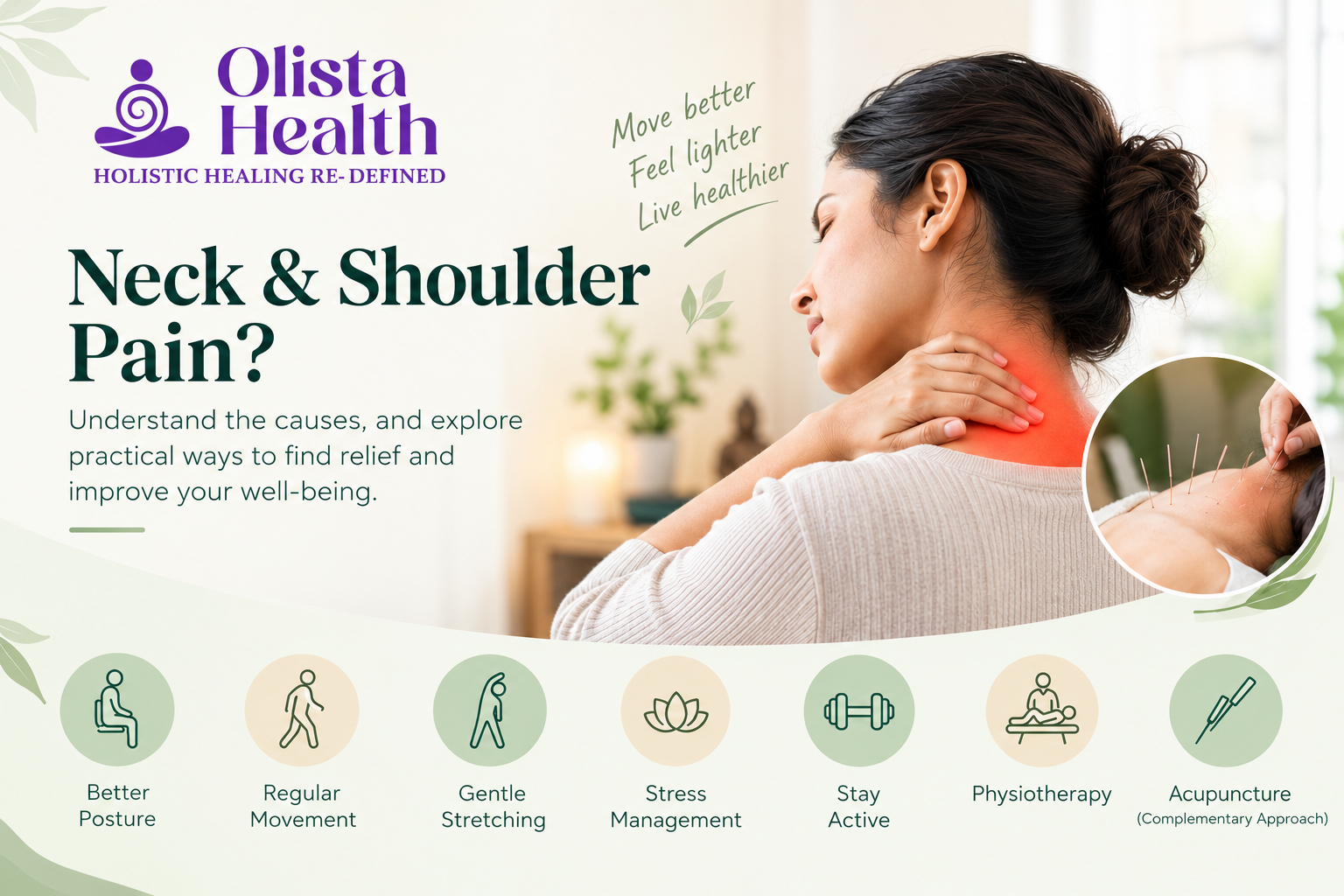
Chronic neck and shoulder pain Neck and shoulder pain has become increasingly common in everyday life. Long hours at a desk, prolonged mobile-phone use, poor posture, stress, lack of movement, and repetitive activities can all contribute to discomfort in the neck and shoulders.
For some people, the pain may be temporary and improve with rest. For others, it can continue for weeks or return repeatedly, affecting sleep, concentration, work, and daily activities.
Fortunately, there are several approaches that may help support better neck and shoulder health. Depending on the underlying cause, a combination of movement, posture correction, lifestyle changes, physiotherapy, and complementary therapies such as acupuncture may be considered.
What Causes Neck and Shoulder Pain?
Neck and shoulder discomfort can have many possible causes. Some common contributing factors include:
- Poor sitting or standing posture
- Long hours working on a computer
- Excessive smartphone use
- Muscle tension and stiffness
- Repetitive movements
- Lack of physical activity
- Stress and muscle tension
- Sleeping in an uncomfortable position
- Previous injuries
- Age-related changes in the spine
- Conditions such as cervical spondylosis or frozen shoulder
Identifying the possible cause is important because the most appropriate approach can vary from person to person.
1. Improve Your Posture
Poor posture can place additional strain on the muscles and joints around the neck and shoulders.
When working at a desk, try to keep your:
- Head in a comfortable, neutral position
- Shoulders relaxed rather than raised
- Back supported
- Screen close to eye level
- Feet comfortably supported
Avoid continuously bending your neck downward while using a smartphone. Whenever possible, raise the device closer to eye level.
Small posture adjustments throughout the day can make a significant difference to overall comfort.
2. Take Regular Movement Breaks
Staying in one position for long periods can increase stiffness and muscle tension.
If your work involves sitting for several hours, consider taking short movement breaks throughout the day. Stand up, walk around, gently move your shoulders, and change your working position.
Simple movements can help prevent the neck and shoulder area from becoming excessively stiff.
3. Try Gentle Stretching
Gentle stretching may help maintain flexibility and reduce the feeling of stiffness.
Depending on your condition, simple movements may include:
- Gentle neck rotations
- Shoulder rolls
- Chin tucks
- Upper-back stretches
- Gentle chest stretches
Stretching should be comfortable and controlled. Avoid forcing a movement or continuing an exercise that causes significant pain.
If you have an existing neck or shoulder condition, it is better to discuss suitable exercises with a qualified healthcare professional.
4. Manage Stress and Muscle Tension
Stress can contribute to increased muscle tension, particularly around the neck and shoulders.
People often unconsciously raise their shoulders or tighten their neck muscles when they are stressed.
Relaxation techniques such as deep breathing, adequate sleep, meditation, gentle exercise, and taking regular breaks may help support overall muscle relaxation.
Managing stress is not a replacement for medical care, but it can be an important part of a healthy lifestyle.
5. Maintain a Healthy Level of Physical Activity
Regular physical activity can support mobility, strength, and overall musculoskeletal health.
Activities such as walking, gentle yoga, swimming, or other suitable exercises may help keep the body moving.
The right activity depends on your age, fitness level, symptoms, and underlying condition. If movement consistently increases your symptoms, seek professional guidance rather than pushing through the pain.
6. Consider Physiotherapy
Physiotherapy can be useful for people experiencing persistent neck or shoulder problems.
A physiotherapist may assess your posture, movement, flexibility, muscle strength, and functional limitations. Depending on the assessment, treatment may include therapeutic exercises, mobility work, strengthening, posture education, and other appropriate techniques.
A personalized treatment plan can be more useful than relying on the same exercises for everyone.
7. Acupuncture as a Complementary Approach
Acupuncture is a traditional therapeutic practice that involves the placement of very fine needles at specific points on the body.
Some people consider acupuncture as part of a broader approach to managing musculoskeletal discomfort. It may be used alongside other appropriate care depending on the individual’s condition.
At Olista Health, acupuncture is approached as part of an individualized wellness and treatment plan rather than a one-size-fits-all solution.
If you are considering acupuncture for neck or shoulder discomfort, consult a qualified practitioner who can assess your symptoms and determine whether it is appropriate for you.
8. Cupping Therapy
Cupping therapy is another complementary therapy that some people use for muscular tension and discomfort.
The technique involves placing cups on the skin to create suction. It may be incorporated into a broader treatment plan depending on the individual’s needs.
Cupping is not suitable for everyone, so it is important to discuss your medical history and current symptoms with a qualified practitioner before treatment.
9. Pay Attention to Your Sleeping Position
The way you sleep may affect how your neck and shoulders feel in the morning.
A comfortable pillow should support the natural position of your neck without forcing it excessively upward or downward.
Try to avoid sleeping in positions that consistently cause neck discomfort. If you frequently wake with pain or stiffness, discussing the problem with a healthcare professional may help identify possible contributing factors.
10. Stay Hydrated and Follow a Balanced Lifestyle
Hydration, nutrition, sleep, and physical activity all contribute to general health.
While drinking water alone will not resolve an underlying neck or shoulder condition, maintaining healthy daily habits can support your overall wellbeing.
A balanced diet, adequate sleep, regular movement, and stress management can all form part of a healthy lifestyle.
When Should You Seek Professional Help?
Occasional mild neck or shoulder discomfort may improve with rest, movement, and lifestyle adjustments. However, persistent, worsening, or severe symptoms should not be ignored.
Consider seeking professional medical advice if you experience:
- Persistent or recurring neck or shoulder pain
- Significant restriction of movement
- Pain following an injury
- Numbness or tingling
- Weakness in an arm or hand
- Pain that interferes with sleep or daily activities
- Symptoms that continue despite self-care
Seek urgent medical attention for severe symptoms such as sudden weakness, significant loss of sensation, difficulty walking, severe injury, or other symptoms that may indicate a serious condition.
A Personalized Approach May Be Better
Neck and shoulder pain can have different causes, which means there is no single solution that works for everyone.
For some individuals, improving posture and activity levels may be enough. Others may benefit from physiotherapy, targeted exercises, or complementary approaches such as acupuncture or cupping therapy.
The first step is understanding your symptoms and identifying the factors that may be contributing to them.
Conclusion
Managing chronic neck and shoulder discomfort often requires more than simply treating the painful area. Improving posture, staying active, taking regular breaks, managing stress, maintaining healthy habits, and seeking appropriate professional care can all play a role.
Complementary approaches such as acupuncture and cupping therapy may also be considered as part of an individualized wellness plan when appropriate.
If your neck or shoulder discomfort is persistent or affecting your daily life, consider speaking with a qualified healthcare professional to understand the possible cause and explore suitable treatment options.
Looking for personalized care for neck and shoulder discomfort? Contact Olista Health to discuss your concerns and explore an appropriate treatment approach.
Frequently Asked Questions
1. What is the most common cause of neck and shoulder pain?
Poor posture, prolonged sitting, repetitive activities, muscle tension, and excessive screen use are common contributors. However, neck and shoulder pain can have many different causes.
2. Can poor posture cause neck and shoulder pain?
Yes. Maintaining an awkward or unsupported posture for long periods can place additional strain on the muscles and structures around the neck and shoulders.
3. Is stretching good for neck and shoulder stiffness?
Gentle stretching may help maintain mobility and reduce stiffness for some people. Exercises should be appropriate for your condition and should not cause significant pain.
4. Can acupuncture help with neck and shoulder discomfort?
Acupuncture is used by some people as a complementary approach for musculoskeletal discomfort. Whether it is appropriate depends on the individual’s symptoms and overall health.
5. When should I see a healthcare professional for neck pain?
If pain is persistent, severe, worsening, follows an injury, or is associated with numbness, tingling, weakness, or significant movement problems, professional evaluation is recommended.
6. Can lifestyle changes help manage chronic neck pain?
Healthy habits such as regular movement, good posture, adequate sleep, stress management, and appropriate physical activity may support better musculoskeletal health.
SEO Information
Primary keyword:
Chronic neck and shoulder pain
Secondary keywords:
- neck and shoulder pain treatment
- natural ways to manage neck pain
- neck pain relief
- shoulder pain management
- acupuncture for neck pain
- acupuncture for shoulder pain
- cervical pain management
- posture and neck pain
- physiotherapy for neck pain
SEO Title:
Natural Ways to Manage Chronic Neck and Shoulder Pain
Meta Description:
Discover natural ways to manage chronic neck and shoulder pain, including posture correction, stretching, exercise, physiotherapy, acupuncture, and lifestyle changes.
Suggested URL Slug:/natural-ways-manage-chronic-neck-shoulder-pain/
Suggested Featured Image Alt Text:Natural ways to manage chronic neck and shoulder pain
Suggested internal links:
- Acupuncture Treatment
- Cupping Therapy
- Electro-Acupuncture
- Contact Us
- About Olista Health